


Why Time Travel Rules Matter In Science Fiction — And a Mistake I Made In My Superhero Comic Book


Time travel is one of the most exciting narrative tools in superhero and science fiction stories because it allows heroes to fix mistakes and villains to rewrite history in their favor.
With time travel, entire worlds and universes can collapse and be rebuilt in just a second or two. However, one crucial aspect sometimes gets overlooked: Rules.
The Problem With Ruleless Time Travel
Without rules, time travel can stop being powerful and start becoming a shortcut which can lead to bad writing.
If characters can just go back in time whenever they want, undo any mistake or tragedy they wish, or escape any consequence, then the tension disappears and nothing in the story truly matters. This can cause readers to begin to feel like the story is just using time travel as a cop out or “reset button.”
Superhero and science fiction stories can lose credibility not because time travel exists in their canon, but because of time travel that has no boundaries or rules.
And of course, there's always the dreaded risk of a time travel story just not making any sense when proper rules aren't established.
Two Major Time Travel Models and Why Rules Create Meaning
A lot of superhero and sci-fi stories use one of two time travel systems: Dynamic time travel, which is where changing the past changes the future, and Multiverse Theory time travel, which is where changing the past creates a new branched timeline while the original remains unchanged. You can read more in depth about these two systems in this time travel blog.
Both have different philosophical implications and emotional consequences from each other. No matter which one is used in a story, the stronger the rules are, the stronger the story tension is.
If time travel has limits, consequences, or some kind of danger, then every jump through time becomes a risk for the characters.
For example, if there's a possibility that a character can accidentally make it to where he never existed, this kind of risk allows readers to be more engaged with the story because now things matter and the stakes are higher.
Time travel rules force characters to make hard decisions which can contribute to powerful storytelling.
The Moral and Philosophical Layer
Time travel doesn't have to be just a sci-fi mechanic. It can also raise worldview questions like:
Should we undo suffering?
Is changing history trying to play God?
Are we responsible for timelines we create?
Is trying to fix the past going to cause a bigger problem in the future?
These aren't just sci-fi or plot questions. They're moral and philosophical questions. When stories explore these types of questions, time travel can become more than doing it just for the sake of doing it. And in stories that deal with faith, destiny, or divine order, time travel can potentially introduce even deeper tension. This is why rules matter even more.
The Mistake I Made In My Superhero Comic Book
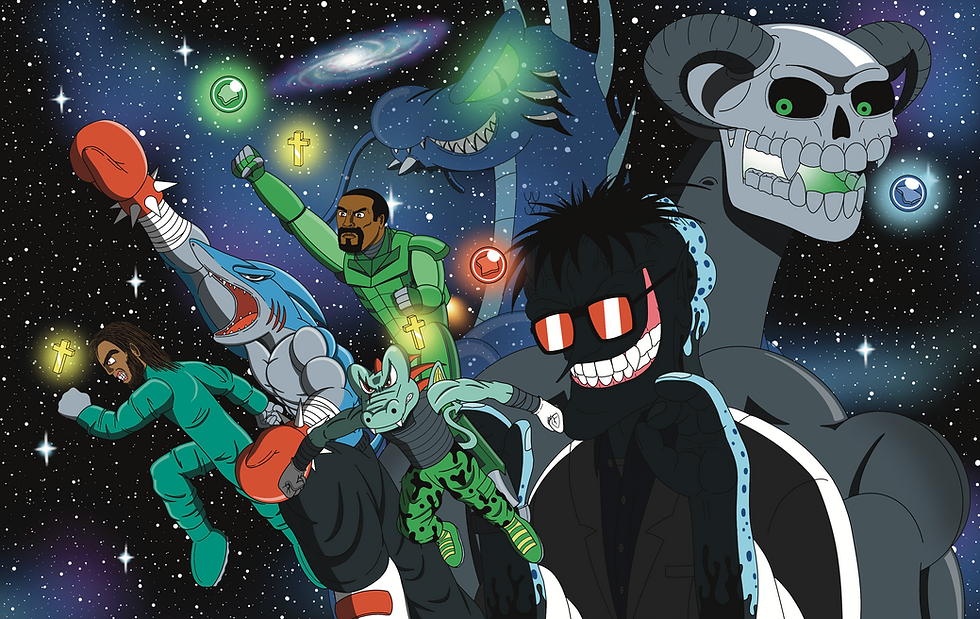
In my own comic book, Zero Hour Epsilon Force, time travel isn’t just a cool ability. It has structure and boundaries. However, I made the mistake of never explicitly stating them in the comic itself.
This is largely due to the time travel part not being the main focus of the issue and not occurring from Tyrannogator's point of view. So when the comic explains that Dr. Ore specifically came to the current timeline on multiverse theory principles, it just leaves it at that and moves on with the plot.
But in the comic specifically, it leaves the questions of how he did it and what's stopping someone else from doing the same. Since it's not really a time travel story, the lack of an explanation was largely due to page limits as well. But looking back on it, I believe I still could've squeezed a simple explanation in somewhere.
One thing I would love to do is dive deeper on the explicit time travel rules of Zero Hour Epsilon Force and expound on them someday. Because once you define the rules, you can define power limits, the cost of interference, and any consequences of time travel, which Dr. Ore learns the hard way.
And when the rules are clear, readers don’t feel confused. They feel immersed.
Final Thoughts
Time travel in and of itself isn’t dangerous to storytelling, but when it's unstructured, it definitely can be. When it's written well, time travel can become one of the most powerful narrative tools in a superhero and science fiction. But only if the universe respects its own written rules and laws.
Because once anything can be undone just at the drop of a hat… Nothing truly matters in a story.
Purchase Zero Hour Epsilon Force Today
Zero Hour Epsilon Force is a fantasy, sci-fi and superhero comic series that takes place in a raw Christian universe. It's Saturday morning cartoon art style allows for fun and action while exploring darker and grittier themes as well as moral and even some philosophical questions. You can purchase the comic here at our online store and feel free to join our email list as well.


Comments