


Why Transformations and Final Forms Matter in Stories and How They Apply to My Christian Fiction Comic Series


Transformations and final forms are pivotal moments in storytelling that truly create excitement.
A hero reaches a breaking point. An adversary unveils a frightening new form. A character discovers a power they previously couldn't access.
In comics, TV, or movies, transformations and final forms often become some of the most unforgettable moments in a series.
However, their significance often goes beyond mere spectacle.
While they can function as simple power ups, at their best, transformations aren't just about gaining strength and power. They can also reveal what has changed within the character.
More Than a Visual Upgrade

A powerful transformation can look exciting, but visual changes alone are not always what make those moments meaningful.
Some of the strongest transformations often represent concepts like growth after struggle, hidden potential realized, sacrifice paying a cost, or courage rising under pressure.
And to add to this, when a character changes outwardly because something changed inwardly, the moment carries real weight.
Why Audiences Love Final Forms
One reason readers and viewers often relate to transformations is that they frequently symbolize a breakthrough.
Everyone knows the feeling of reaching limits, facing pressure, and questioning if more can be achieved. Watching a character surpass that point can be inspiring.
This is why power-up moments can often resonate so profoundly. They embody hope amidst challenges.
Villain Transformations Matter Too
Transformations aren't exclusive to heroes. Villains too can undergo changes as they are overtaken by pride, corruption, or obsession. These instances can symbolize various concepts such as the consequences of seeking power without wisdom or morality for example.
A villain's monstrous new form might sometimes indicate a descent rather than an ascent. This contrast can enhance the significance of heroic transformations.
Do Limits Always Have to Come First?
Some narratives highlight boundaries before a transformation occurs. A character faces challenges, hits a breaking point, and only then discovers a new form. This structure is effective because it makes the transformation feel deserved and dramatic.
However, this isn't the only way transformations can occur. At times, a character’s power may not be something they build up to but instead it already exists, waiting for the right moment to emerge. In these instances, the transformation is more about unveiling strength rather than acquiring it.
This type of change can be linked to ideas such as:
Accepting one's purpose
A change in perspective
A moment when restraint is no longer necessary
In these scenarios, the transformation still holds significance, just in a different manner. It isn't always about reaching a limit. Sometimes it's about embracing what was already present.
Both methods can be effective.
Some transformations are powerful because they are achieved through struggle. Others are powerful because they reveal a deeper aspect that was previously unnoticed.
Ultimately, what matters most is not the trigger for the transformation, but what it signifies for the character.
Transformations In Spidercade's Christian Fiction Universe

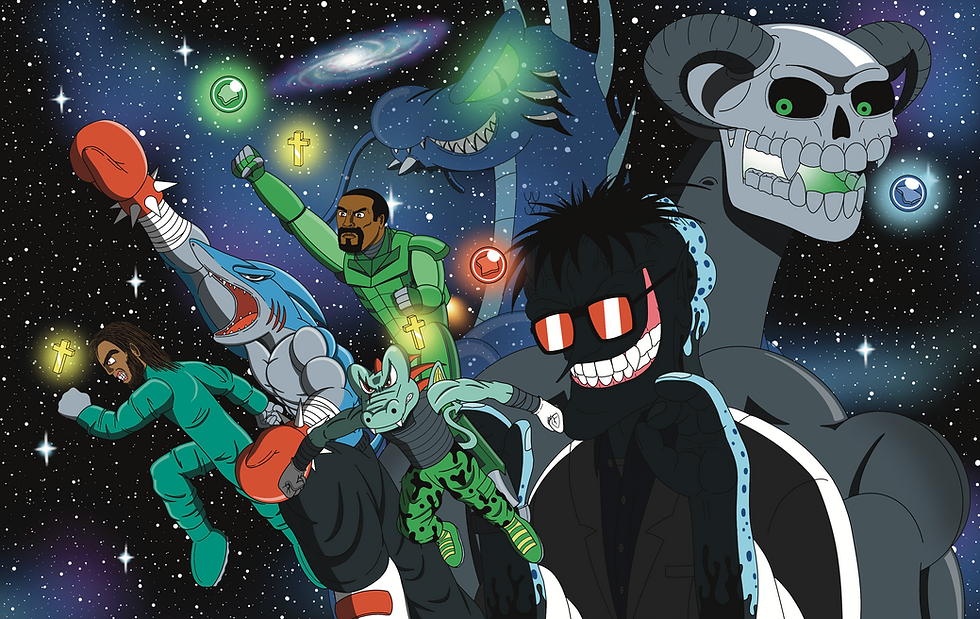
In my indie series Zero Hour Epsilon Force, transformations are not meant to be random upgrades even though sometimes I come up with the ideas for them a little later.
So far, it's been mostly villains and enemies that undergo transformations such as Dr. Ore and the demon as well as a fusion type transformation for one other enemy. But Dr. Ore and the demon are the most prominent out of the evil beings.
Dr. Ore's final form transformation is obtained in anger with the help of the blue tablet shard while fighting Tyrannogator due to his decent into madness and his obsession with beating Tyrannogator.
The demon has a few different forms/transformations throughout his run as one of the main villains in his trilogy arc. Some of his forms are meant to be more of a subtle visual representation of concepts like demon possession (like Legion in the Bible for example) while other forms amongst the action are meant to subtly represent the concept of sin and how it can destroy people.
Of the heroes, Shackles also has at least one transformation on page that represents a power he accesses when he's serious and no longer holding back. Although at this point in the story there are still mysteries as to how his forms work or where he even got them in the first place since many of the fantasy characters and their cellular biology etc. haven't been explored.
Tyrannogator in a way also obtains a type of transformation as his physique changes from rubber hose style arms to muscular arms to reflect his training over time. Though this isn't as dramatic as the other transformations, it's a way to show his growth and change throughout the story as he overcomes his limits.
All of this is to say that there are many ways to achieving a different form in the Spidercade universe and there can definitely be more down the line. A hero may grow stronger through perseverance, responsibility, or sacrifice while another character such as a villain may gain a new form while becoming more unstable, prideful, or destructive.
That means forms and transformations can be strongly tied to who the character is or who they're becoming and that the outer change can reflect an inner reality or even a symbolic concept for example.
A Reflection of Real Life
Most people will never transform in a literal sense like a superhero or anime character, but anyone can experience change or unveiling. Hardship can produce maturity. Responsibility can reveal strength. Trials can expose character. Faith can sustain people through weakness.
Think about athletes who get faster, stronger or more technical for their specific sport or gym goers who get bigger over time with their consistency. Or maybe a musician practices their music in private only to reveal it later. Those are types of real life transformations and final forms. And even in the Bible, many people went through changes throughout their lives like Paul's conversion after his encounter with Jesus or God sometimes changing people's names for example.
Superhero stories use transformations in dramatic ways, but many times, the deeper idea is familiar: people can become more than they once were.
Final Thoughts

Transformations and final forms endure in storytelling because they often represent something deeper than power alone.
Sometimes they come after struggle, failure, and perseverance. Other times, they reveal something that was already present—waiting for the right moment to emerge.
Both paths can carry meaning.
What helps makes a transformation memorable is not just looking cool or how it is reached, but what it says about the character in question. It can reflect growth, purpose, restraint, or even internal conflict.
Transformations and final forms can show who a character truly is when the moment demands it—whether that power was built over time or revealed all at once.
Purchase Zero Hour Epsilon Force Today:
If you're looking for a raw and gritty Christian fiction comic series that has transformations and other unique concepts alongside real world topics, Zero Hour Epsilon Force might be for you. Click here to buy the series at the Spidercade shop and join our email list for future updates by clicking here.


Comments