


How I Self Publish My Christian-Based Comic Book Series As A Small Independent Creator


Having your own comic series is a fun and exciting experience. In my drawing process blog, I explained and showed how I go about drawing my different comic pages. But what happens once the drawing is finished? This is part of the self-publishing process.
While self-publishing a comic may seem a bit overwhelming, it becomes a lot more manageable once you understand the steps on how to do it. The great part about self-publishing as an indie creator is that you don't need a huge publisher to bring your story to life.
In this blog, I’ll explain how I self-publish my comic—from finalizing the book to getting it printed and selling it directly through my website.
Why I Chose To Self-Publish
There are more options than ever for creators today, but self-publishing offers something powerful: control.
As someone who's passionate about drawing and writing, control over my own projects and ideas is a must for me.
By handling the process myself, I can:
Keep full ownership of my story and characters
Control the release schedule
Set my own pricing
Build a direct relationship with readers
Getting an ISBN for the Comic (Optional)
Single issue comics don't typically require ISBNs, as they are serials. But I love to have one because an ISBN (International Standard Book Number) can help your comic be recognized as a legitimate published book. It can make your comic more professional and allow it to be listed in book databases.
While not always required for direct sales like at conventions and such, having one can help you expand into bookstores or libraries later if you choose to do so. Graphic novels specifically, typically need ISBNs for this reason.
While I didn't initially purchase ISBNs when I first started selling, I later decided to get them for professionalism. I personally get my ISBNs from Bowker Identifier Services. Once I have the barcode, I will place it on the comic, usually on the back cover or somewhere where there isn't any artwork and then I prepare the book for printing.
Finalizing the Comic for Printing
Before anything gets printed, the comic needs to be fully complete and properly formatted.
This includes:
Final artwork
Proper page sizing and bleed settings
Exporting print-ready files
Double-checking for errors
Be sure to take your time here to ensure you don't have any mistakes in your book. This is also one of the stages where having an editor, or someone you trust to look at your work, can help.
Sending the Comic to a Printing Company
Once the comic is ready, the next step is working with a printing company. I personally use Comix Wellspring since they have great quality and good customer service. But you can use any print company that suits you.
This involves:
Uploading your print-ready files using their requirements
Choosing paper type, size, and binding
Deciding how many copies to order
Reviewing a proof before full production (the proof is also the last chance to catch any potential errors before printing the books for real, so once again, take your time and check through the proof carefully before full production).
Printing the comic is one of the biggest upfront financial investments, so it’s important to plan carefully. Ordering the right quantity helps balance cost and risk.
Receiving the Shipment
After printing is complete, your comics are shipped directly to you.
This is where everything becomes real—you now have physical copies of your hard work in hand.
At this stage, you can check the quality of the books, organize your inventory and prepare for packaging and shipping to customers.
Selling the Comic On a Website
Right now, instead of relying only on third-party platforms, I mostly sell my comic directly through my website.
This allows me to keep more of the profit from sales, control the customer experience and build a direct connection with readers.
Once the shipment arrives, I list the comic on my site, add product descriptions and images, set pricing and shipping options, and start promoting it through various different means (though I also promote it while I'm creating as well).
Copyrighting
Protecting your work by copyrighting it is another important step of the self-publishing process. While your work is technically protected as soon as you create it, officially registering it with the United States Copyright Office can give you stronger legal protection and proof of ownership. As a small indie creator, this adds an extra layer of security and professionalism especially if you want to grow your brand in the future.
Here is the United States Copyright Office website that I go to when I do copyrights for my projects.
Marketing and Driving Traffic
Publishing the comic is only part of the process—people still need to find it. That’s where the hard part comes in. Marketing.
Some strategies can include:
Posting videos or pictures of your work on social media (YouTube Shorts, TikTok, Instagram, etc.)
Building an email list
Reaching out to communities that align with your story
Marketing definitely isn't easy and is honestly probably the hardest part of the entire process. But consistency in marketing efforts over time is what can turn a finished comic into some sales.
Challenges of Self-Publishing (And Why It’s Still Worth It)
Self-publishing isn’t always easy. You’re responsible for production costs, distribution, customer fulfillment, and of course the hardest part, marketing.
But the upside is worth it especially if you want your own intellectual property. You’re not waiting for approval from anyone—you’re building something real, on your own terms.
Final Thoughts: Turning Your Comic Into a Real Product
Self-publishing takes a lot of effort, but it’s one of the most direct ways to bring your vision and ideas to life.
The process is simple in structure:
Finish the comic book
Get an ISBN (optional)
Send it to the printing company
Receive the books
Sell them on the website
Copyrighting
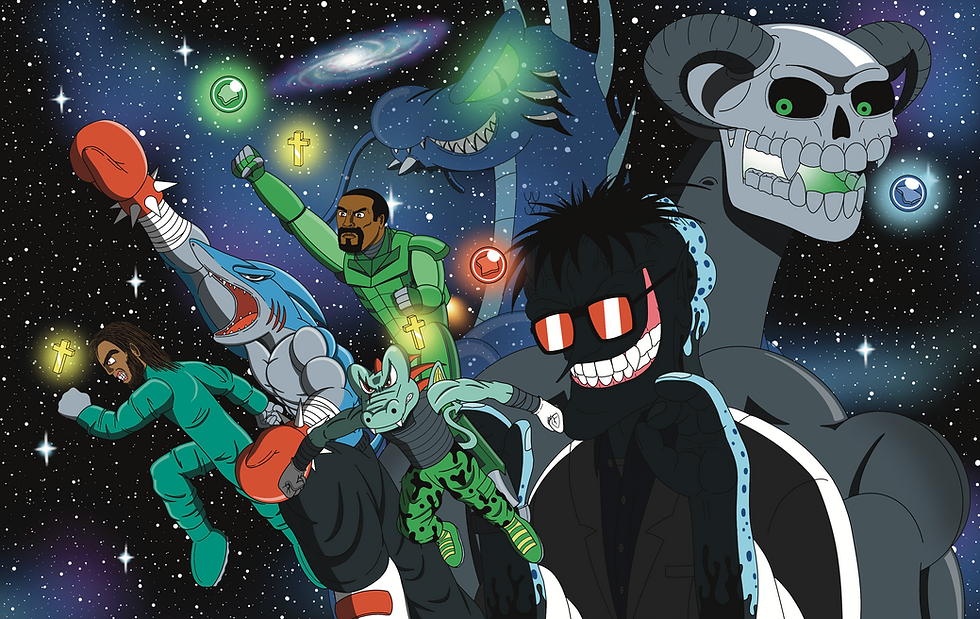
From there, it becomes more about consistency—continuing to create, promote, and grow your audience as best you can. If you'd like to see what an indie self-published comic looks like in action, you can check out my series at the Spidercade Shop and follow the journey as new issues release.


Comments