


Why Indie Comic Creators Have To Think Differently Than Big Studios — And How I Applied This To My Comic Series
- Spidercade Insights

- Mar 13
- 4 min read

When I first started out as a creator drawing my comic series, it was easy to look at big studios and assume their approach was the blueprint.
But the longer I worked on my series, the more I realized that indie creators don’t get to think the same way big studios do.
In fact, it can be a different game entirely.
Big studios have massive teams, huge marketing budgets, recognizable brands, and built-in audiences that already care.
Chances are, a small indie creator who's just starting out doesn't.
Big Studios Already Have Audiences And Reach
Large studios and brands already have millions of people paying attention and consuming their content.
That means they can release projects that are familiar, safe, and maybe sometimes even generic. They’ll still get views, clicks, and sales even if a particular project isn't as well received by the audience that consumes it.
Their brand carries momentum.
But small indie creators often don’t have that luxury because no one is waiting for our work initially. A lot of what we do has to earn attention from zero.
Indie Comics Start With Meaning
Because we don’t have guaranteed audiences starting out, we have to begin somewhere else.
With my series, Zero Hour Epsilon Force, I needed to start with: Why should anyone care about this story and world?
Early on, I realized that if I was going to invest years of my life into a comic series, it couldn’t just exist to look cool.
I also wanted it to be impactful, relatable and motivational as it empowered different kinds of people. That requirement alone changed how I approached everything.
Struggling to Define My Series Identity
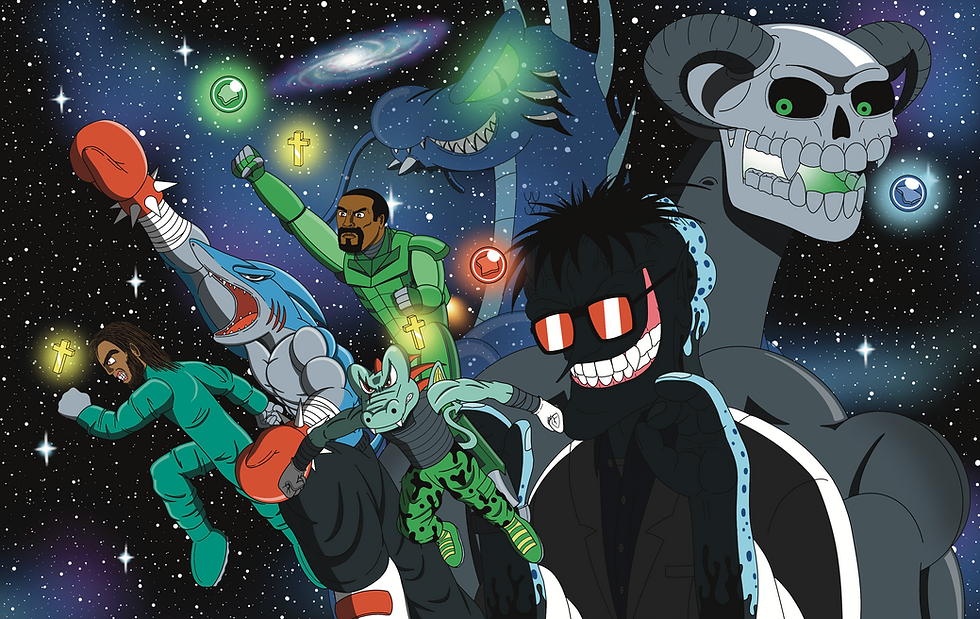
When I began, I was heavily influenced by superheroes, science fiction, and Saturday morning cartoons. These are some of the genres and mediums I grew up loving. Virtually all of them were produced by big studios.
But I also wanted my series to contain deeper meaning. I wanted to explore real-world themes.
And I of course wanted Jesus to be at the center of the comic's foundation.
At first, those ideas felt difficult to combine especially since I still wanted heavy action and serious threats that were reminiscent of the genres I was influenced by.
I wasn’t sure:
Exactly how the Christian elements should be implemented
How intense the action and serious subject matter should be
Whether these things could coexist naturally while still appealing to a target audience
For a while, my series identity felt a bit blurry. Not because I lacked ideas or because I didn't have a target audience in mind. But because I had a lot of directions wanting to pull at me all at once while still having a big end goal.
And this made me worry if people would be confused about what the series label or identity was especially as a small indie creator.
Letting The Hybrid Identity Exist Because It's Different
Eventually though, I stopped worrying about if my comic fit into a single box or fit a label perfectly because that was never really my end goal or natural style anyway.
Instead of asking: “Is this a superhero comic or a Christian comic or something else entirely?”
I started thinking more along the lines of:
“It’s a superhero, fantasy and sci-fi comic with a Christian foundation that also addresses different kinds of relatable topics. ”
That shift mattered.
It allowed me to let:
Action exist
Adventure exist
Faith exist
Serious themes exist
Without any one element needing to erase the others, even as a small indie creator.
If I wanted, I could have stories that talked about black history, cancer or some other human struggle while still having the overall comic universe take place in a raw Biblically based setting that pointed to Jesus.
I could have stories that took place in a Christian universe that weren't necessarily Christian focused.
I could even have stories sprinkled in that may not have had overtly relatable themes at all, but were just fun action stories.
And the cartoon art style made it possible to have all of those different aspects without anything feeling out of place because cartoons can work with a variety of themes and genres.
The series didn’t need to look like existing Christian media. It didn’t need to look like mainstream superhero comics either. It just needed to look like itself.
While the series can pass as any one of those genres, it's still very different from the stereotypes in those genres as well. And different is good when you want to stand out and make an impact.
Indie Advantage: Specificity
Big studios often aim for broad appeal.
But small indie creators can aim for specific resonance.
My comic aims for specific resonance by having different kinds of distinct stories that may each resonate with a different kind of person but are still connected. That connection across stories can build up and culminate into events like fighting a demon who rebelled against God or eventually fighting an evil fantastical demigod who terrorizes the galaxy.
This way, it has a lot of specific resonance while still being influenced a bit by a broader appeal as well. And that's my natural style.
Not everyone will connect with my comic and that’s okay.
If a smaller group connects deeply with its messaging, that’s more valuable than shallow attention from millions. Specific stories can create stronger bonds. Stronger bonds can create supporters. And supporters build sustainability.
Final Thoughts
While there are many beloved big name stories that influence millions, indie creators don’t always win by fully copying those big multimillion brands. But we can win by offering things they don't usually seem to do:
Personal vision.
Risk.
Raw honesty.
Meaning.
Once I accepted that, everything became clearer. My goal stopped being “make something that competes with big studios.”
My goal became:
Create something that truly matters.
Read Zero Hour Epsilon Force Today
Zero Hour Epsilon Force is a unique indie superhero, fantasy and science fiction comic series that takes place in a raw Christian universe and is drawn in a cartoony art style. It's meaningful and action-packed stories are meant to provide impact and value while still getting the reader hooked and wanting more.
If you want to try a different type of series with awesome world building, you can buy the comic series here at the Spidercade Studios shop and join our email list as well. Also check out this blog to learn more about the Spidercade community.


Comments