


When The Good Guys Fight Each Other — A Talk on Hero vs. Hero Fights (Including a Biblical Perspective)


In this villains article, I specifically discussed villain vs. villain fights. But what about when the script is flipped and the good guys are at each other's throats?
When many people think of superhero stories, they may imagine heroes fighting against villains. A battle of good versus evil or justice versus corruption or heroes putting a stop to dangerous threats before innocent people can get hurt.
Yet sometimes, there are moments in superhero stories that don’t involve heroes fighting villains at all. They actually involve heroes fighting each other like Captain America and Iron Man did in Civil War for example. While heroes vs. heroes is probably not quite as common as the typical heroes vs. villains story arcs, whenever it does occur, why does it? And also, why do audiences enjoy it?
Heroes Often Want The Same Thing
When a hero vs. hero brawl breaks out, are one of the heroes all of a sudden evil? Not necessarily.
In many cases, neither hero is really wrong. Instead, both characters may genuinely be trying to do what they believe is right. The conflict may come from a misunderstanding due to different information, different priorities, simply a difference of opinion, or some other understandable reason.
One hero may see a threat while another hero may see an innocent victim. One hero may believe immediate action is necessary while another may believe patience is the better solution. This can especially be true if one hero is more jaded or pragmatic and another may have a stricter moral code. Or maybe one hero is more hotheaded than another. The result is often some sort of conflict.
The Role of Misunderstandings — Sort of The Way I Did It
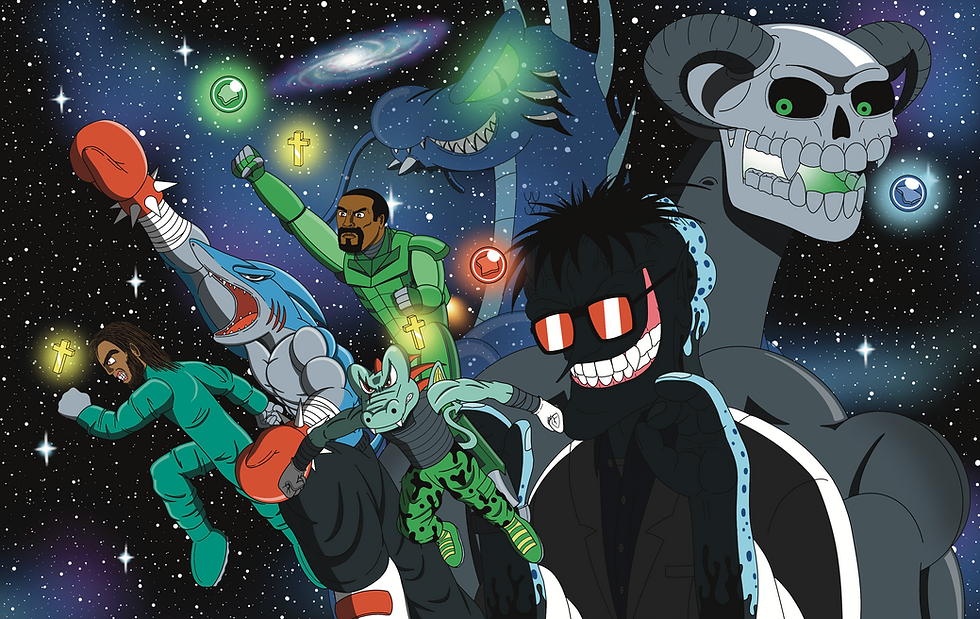
While not the only way, misunderstandings can be one of the common causes of hero-versus-hero battles. This is what I partially used for Spidercade's brief hero vs hero fight in Zero Hour Epsilon Force and what I'll mostly cover in this blog.
While there can be some potential negatives with this storytelling device, misunderstandings can be realistic when handled properly because in real life, people may make decisions based on the information that's available to them. If that information is incomplete, even good people can reach very different conclusions.
This is especially true in stories involving hidden agendas or simply fast-moving or urgent situations. Sometimes heroes are not fighting because they dislike each other. They are fighting because they don’t yet fully understand each other.
And if you create a story where you want to introduce a new hero but make them seem more antagonistic or villain-like at first as way to rival, expose a limit of, or challenge the hero the audience is following, a misunderstanding is a good way to make this happen.
Certain Kinds of Conflict Can Sometimes Reveal How A Character Operates
When heroes clash, readers can learn how those particular heroes handle disagreement, frustration, and uncertainty.
Are some heroes quick to rush into battle and throw hands? Do some attempt to communicate? Do they remain humble when challenged?
These moments may sometimes reveal more about a particular character than a fight against a traditional villain. It's one of the ways a writer can make a hero feel human.
Why Hero Fights Can Feel Different But Still Be Enjoyed
When an intimidating villain appears, the audience usually knows who to support. But a hero-versus-hero fight? Those stories can bring questions and uncertainty.
The audience may actually agree with both sides to an extent or genuinely not know who to side with. That creates tension because there is no easy answer.
Instead of asking: “Who will win?” or "Who is stronger?"
The audience may actually ask: “Who is right?”
That question can be much more interesting sometimes than a typical power scaling question alone. It can also be part of why audiences enjoy these types of brawls when they occur.
The Importance of Communication
Now sometimes conflicts between heroes in fiction could theoretically be solved through a simple conversation. However, communication is not always easy. And we of course know that talking it out wouldn't make for a very entertaining story especially if action and fighting is part of the core identity of the series.
In real life, people sometime bring emotions, assumptions, fears, and past experiences into different conversations. So even when two people share similar goals, things can still go south if communication isn't as strong as it should be. And stories, whether they're comics or other types of mediums, that acknowledge this reality often create more believable conflicts, which is part of what I aim to do with Spidercade Studios and Zero Hour Epsilon Force.
Biblical and Real-World Examples

While misunderstandings are what I mostly talk about in this blog since that's more of the writing device I used, as I said before, that is not the only way to spark conflict. Some people can just simply disagree and that's common as well.
Even scripture contains examples of faithful people on the same side who experienced disagreements and conflict. One example is Paul and Barnabus in Acts 15:36-41. when they disagreed over whether to take John Mark with them on their missionary journey after he had departed from them from Pamphylia.
The Bible says that the contention was so sharp that Paul and Barnabus ended up splitting from each other and going separate ways with Barnabus taking John Mark with him. And even in the modern Church today, genuine and well-meaning Christians can disagree sharply over different things like certain Biblical interpretations for examples.
But just like when superheroes in fictional stories often reconcile eventually after heated fights, conflict in real life does not always need to be the end of a relationship. Sometimes it can even become an opportunity for growth sort of like how God used Paul and Barnabus' split to allow the Gospel to spread to even more people since the split created more missionary teams.
And responses afterwards matter too. While the Bible never explicitly says that Paul and Barnabus reconciled, many people believe that they did based on some of Paul's other writings like 1 Corinthians 9:6 where he speaks of Barnabus in a respectful way and verses like Colossians 4:10 or 2 Timothy 4:11 for example where Paul acknowledged John Mark.
Why I Find Hero-versus-Hero Stories Interesting
As an indie comic creator, I sometimes appreciate stories where conflict arises naturally from character motivations or personality clashes, rather than straightforward good-versus-evil scenarios.
At times, the toughest challenges aren't always external threats like from a villain for example. They might instead involve comprehending another person’s perspective.
While a battle between heroes can offer thrilling action, the true value often lies in how the characters get through it and what they learn from the experience. Lessons about trust, communication, and even reconciliation can be just as crucial, if not more so, than the fight itself.
Beyond Good Versus Evil
Superhero stories can be remembered for their villains, powers, and action scenes. But some of the most meaningful moments can actually occur when heroes are forced to confront their own assumptions as well.
When handled well, hero-versus-hero conflicts remind us that even good people who are on the same side can still disagree. The challenge is learning how to keep moving forward without allowing a disagreement to become permanent division.
This helps to show that one of the true measures of a hero is not whether conflict occurs, but how they choose to respond when it does occur.
Buy Zero Hour Epsilon Force at the Spidercade Studios Website Today
Zero Hour Epsilon Force is an independent fantasy, superhero, and sci-fi comic series that takes place in a raw Christian universe and uses a cartoon art style. It explores grittier themes, such as the one talked about in this article, making it suitable for teens and up.
If you want a Christian-based action comic that explores different themes like this and has heroes that aren't perfect but relatable and even likable, you can purchase the series here at Spidercade Studios and join our email list as well. Thank you for supporting black-owned small businesses.

Comments